Verbena Buzz Button (Toothache Plant) Recipe
Verbena Buzz Button (Toothache Plant) Ingredients
1.5 oz. (45 ml) Tequila
.75 oz. (20 ml) Yuzu Juice
.5 oz. (15 ml) Calamansi Juice Concentrate
.5 oz. (15 ml) Ginger Syrup (I used Liber Ginger Syrup)
.5 oz. (15 ml) Simple Syrup
Buzz Button for garnish
How to make a Verbena Buzz Button (Toothache Plant)
Put tequila, yuzu juice, calamansi juice, ginger syrup, and simple syrup in a shaker with ice.
Shake and Strain into an old fashioned glass and garnish with a buzz button.
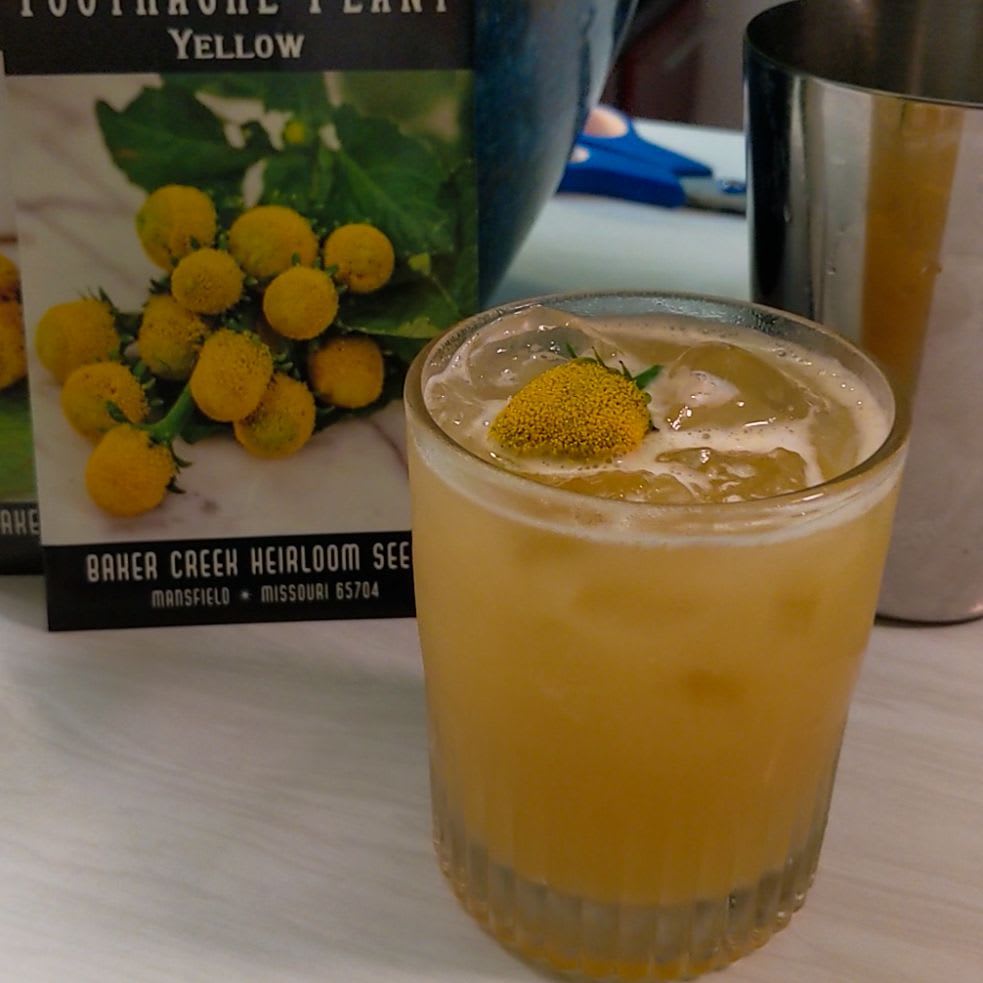
This tequila and yuzu juice cocktail has some very interesting citrus ingredients and uses edible cone shaped flowers. Calamansi juice and ginger syrup provide additional layers of flavor to the Verbena cocktail.
It’s topped off with an edible flower known as a buzz button, electric daisy, Jambú, or Szechwan flower, which creates a pop rocks like sensation in your mouth! I first learned about them in Las Vegas in a bar at the Cosmopolitan. The Chandelier bar in Las Vegas has introduced this unique sensation to many people through their Verbena cocktail, which I have tried to replicate with this cocktail recipe.
These edible flowers originated in Brazil and are known as Jambú and are used to make Cachaça de Jambú. They are very easy to grow at home! Check out the product links below to order your own buzz button seeds.
In addition to being used in cocktails, these flowers have many culinary and medicinal uses. They have been used to treat toothaches, causing the plant to sometimes be referred to as the toothache plant.
If you want to see how buzz buttons work in other builds, I've also muddled one straight into a mojito and infused one into gin for a White Lady.
Frequently Asked Questions
Why is it called the toothache plant?
Buzz buttons come from Acmella oleracea, a plant whose leaves and flowers have been brewed into teas and chewed as a folk remedy for toothaches for centuries. The numbing effect comes from a natural compound called spilanthol. Modern dentistry has better options, but the name stuck.
What happens when you eat a buzz button?
Chew it and you'll get a quick grassy taste, then a fizzy, pop rocks style tingling that spreads across your tongue, along with a rush of saliva. That's spilanthol working on the trigeminal nerve in your face. The Chandelier bartenders coach you to chew the flower and move it all around your mouth before sipping, and it's good advice: the tingle fades after a few minutes, and citrusy drinks taste noticeably brighter while it lasts.
Is there real verbena in the Verbena cocktail?
In the original, yes. The Chandelier bar's off-menu Verbena, poured on Level 1.5 since late 2010, combines Herradura Blanco tequila, yuzu, kalamansi, ginger, and lemon verbena, an herb with a bright lemony fragrance. My home version leans on ginger syrup instead of the fresh herb, since the buzz button is the real star. Forbes once reported the Verbena had quietly racked up over $9 million in sales without ever appearing on a menu.
Are buzz buttons safe to eat?
Yes. In Brazil the plant is an everyday food crop: the leaves go into stews like tacacá and the flowers flavor Cachaça de Jambú. Food safety researchers have studied spilanthol and set conservative daily intake levels, and a single flower garnish is nowhere near them. If you're allergic to plants in the daisy family, this is one to skip.
Where can you buy buzz buttons?
Fresh buzz buttons rarely show up in grocery stores. The easiest route is growing them from seed, and they're low-effort plants that do fine in pots; there's a seed link in the Related Products section on this page. If you don't want to wait a growing season, specialty edible flower suppliers sell fresh ones online.