THC vs. CBD: What's Actually in Your Drink
 | July 12, 2026
The short answer: THC gets you buzzed. CBD doesn't. Both come from the same plant family, both show up on drink labels, and mixing up which one you're buying is the fastest way to have either a much bigger night than planned or a much more boring one.
I spend my time mixing THC spirits into real cocktails, so this is the bartender's version of the comparison, not the chemistry lecture.
What THC actually does in a drink
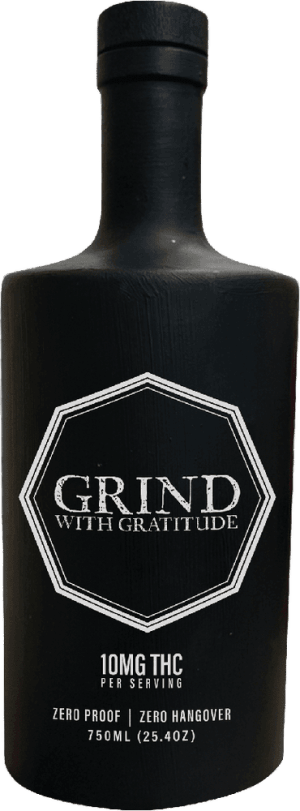
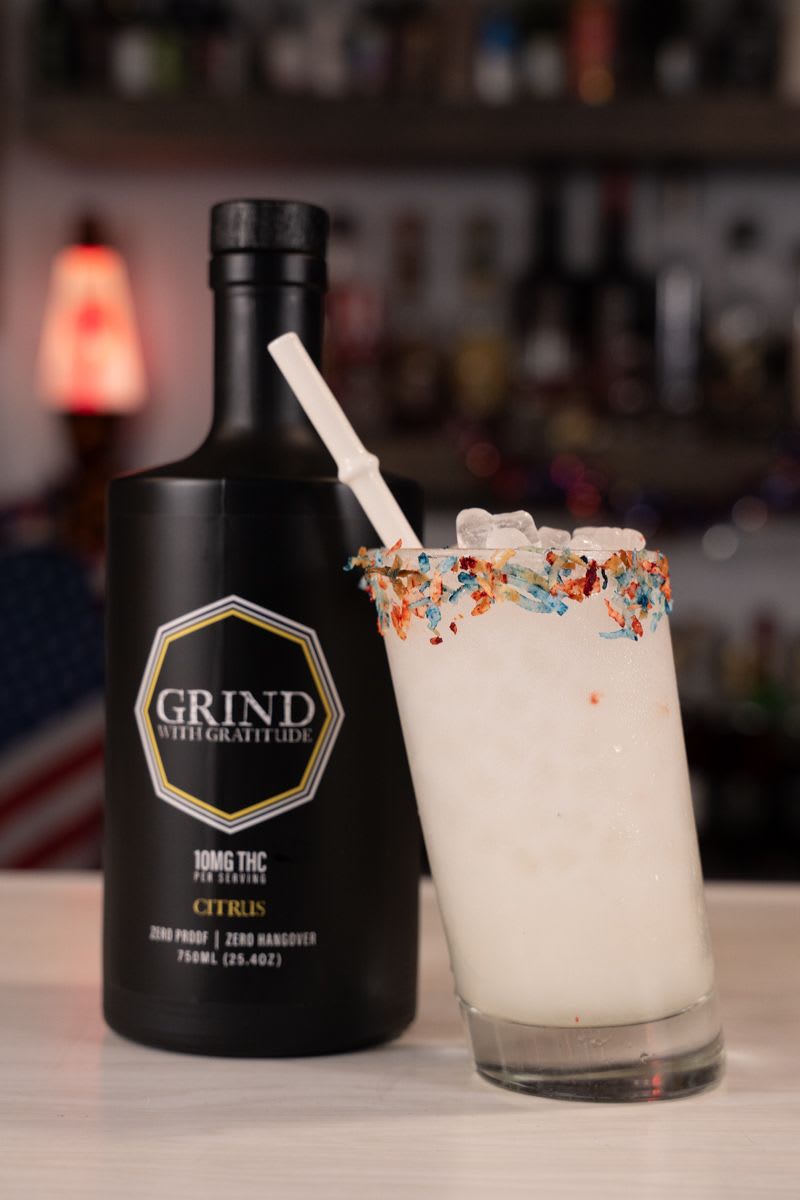
THC is the one with the buzz. In drink form (spirits like Grind With Gratitude or Ellora, or canned seltzers), it's dosed in single-digit to low-double-digit milligrams per serving, which lands as a social, relaxed lift rather than a couch-lock event. It's the reason these drinks work as an alcohol swap: there's actually something happening in the glass. (How it compares to a drink-drink is its own article.)
The "how is this legal?" question comes up every time. The short version is that these are hemp-derived, and I covered the long version in my Willie's Remedy legal explainer.
What CBD does (and honestly, doesn't)
CBD is non-intoxicating. No buzz, no impairment, no "feeling it." People reach for it to take the edge off and wind down, and plenty swear by it, but the research is still catching up to the marketing, so I'd treat big promises on CBD labels with the same skepticism you'd give a hangover-proof tequila.
For cocktail purposes, the practical takeaway is simple: a CBD drink is a mocktail with a wellness angle. A THC drink is a different category entirely.
Why some labels list both
Plenty of products blend them. You'll see labels like "5mg THC / 10mg CBD." The common claim is that CBD evens out the THC experience and makes it less likely to tip into anxious territory. Some people notice that, some don't. What matters when you're buying: the THC number is the one that determines your night. Read it first, and check whether it's per serving or per can. Those are very different labels on very similar-looking products.
Read the label like a bartender
This is the part most people skip. Every legitimate THC or CBD drink brand publishes a COA, a certificate of analysis from an independent lab confirming what's actually in the bottle. When I compared Willie's Remedy against Grind With Gratitude, the COAs were how I could say they're the same lab-tested 10mg strength at very different prices. The label talk is marketing; the COA is receipts.
Three things to check on any bottle or can:
- Milligrams of THC per serving: and how many servings are in the container.
- THC vs. CBD split: so you know whether you're buying a buzz or a vibe.
- A findable COA: usually a QR code or a link on the brand's site. No COA, no purchase.
Which one belongs in your glass?
If you want a real replacement for a cocktail, something that gives the evening an actual arc, you want THC, starting low (2 to 5mg) if you're new. If you want zero impairment (you're driving later, or you just don't want a buzz), CBD or fully THC-free is your lane.
One caveat worth repeating: THC shows up on drug tests, and even some CBD products contain trace THC. If testing is part of your life, read those COAs extra carefully, or sit this category out entirely.
THC products are intended for adults 21 and older. Effects vary by person and product. Start with a low dose, allow adequate time before consuming more, and don't drive after use.