The THC Drink Ban Is Real: The Deadline, the Delay, and What to Do Now
 | July 28, 2026
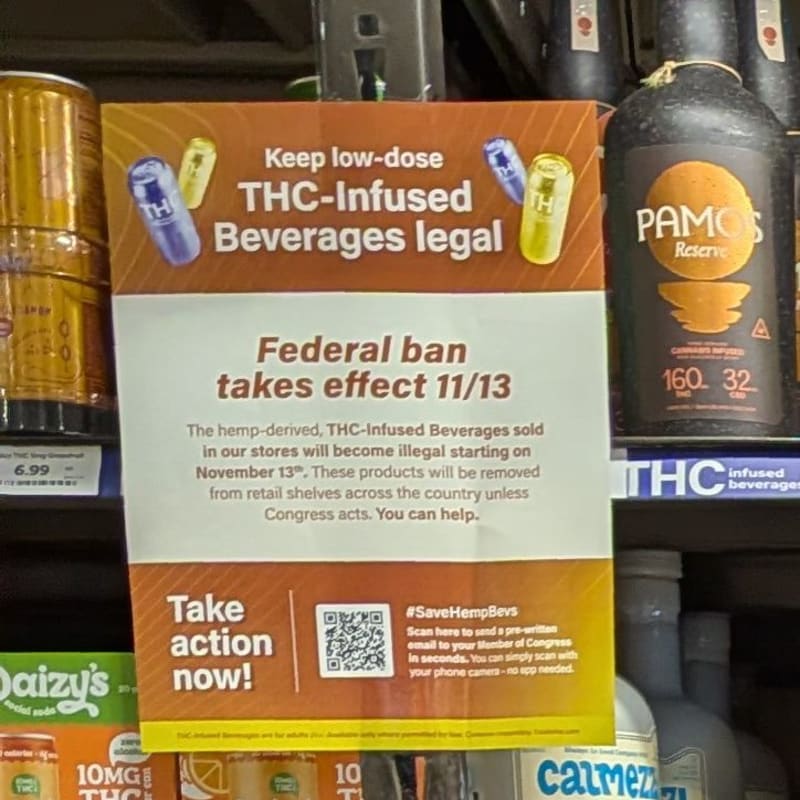
I was at Total Wine this week and walked past the THC drinks aisle, the same shelves where I have bought most of the products reviewed on this site. There was a new sign hanging on the shelf edge: "Federal ban takes effect 11/13. The hemp-derived, THC-Infused Beverages sold in our stores will become illegal starting on November 13th. These products will be removed from retail shelves across the country unless Congress acts."
That sign is not an exaggeration. It is an accurate summary of a federal law that has already passed. The date on it is now a month early for drinks. On September 3 the president signed a bill that moved the beverage deadline to December 11, while delta-8 products still end November 12. Here is what is actually happening, what it means for the drinks I cover on this site, and what I am personally doing about it before the shelves clear.
If you only read one section, make it this one. The drinks deadline is December 11, 2026 (delta-8 and delta-10 products still go on November 12). Everything I mix with on this site is legal to buy and ship right now, and this is what I'm stocking before the shelves clear. The full reasoning is in the "What I'm doing before December" section below.
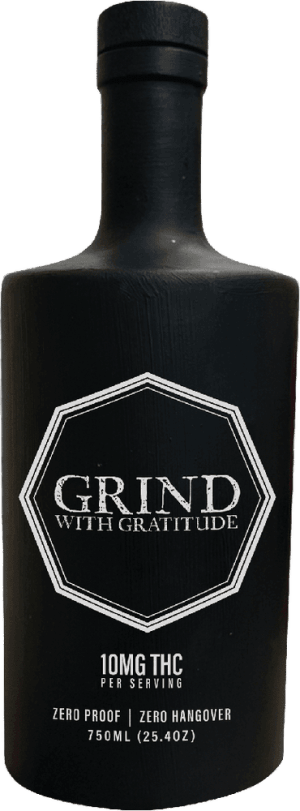
- Grind With Gratitude, the THC citrus spirit made in the same facility as Willie's at about half the price. Code 50OFF takes 50% off sitewide. The full cost-per-milligram comparison is in my Willie's Remedy alternatives post.
- Ellora and Crescent 9 from Crescent Canna.
- Mission Farms Elevate, the powdered THC mixer behind my no-booze Painkiller and no-scotch Penicillin. Code SHARETHEGOOD is 40% off.
Start low and slow. None of these disappear before the deadline, but the sale codes might.
What the law actually says
Back in November 2025, Congress passed the appropriations act that ended the government shutdown. Tucked inside it was a provision that rewrites the federal definition of hemp, the legal foundation that has made every THC seltzer, tonic, and infused spirit on that Total Wine shelf legal to sell since the 2018 Farm Bill.
The new rule, in plain English:
- A finished hemp product may contain no more than 0.4 milligrams of total THC per container. Not per serving. Per container, meaning the can or bottle in your hand.
- "Total THC" now includes THCA and related compounds, closing the loopholes brands used to stay compliant on paper.
- Cannabinoids synthesized outside the plant (like delta-8 made from converted CBD) are banned outright.
For scale: a single 5mg serving of Willie's Remedy is more than twelve times the new limit for an entire bottle. A 10mg can of Crescent 9 is twenty-five times over. There is no reformulating around a number that low. Every THC drink I have ever reviewed or mixed with on this site becomes federally illegal to sell when the law takes effect.
When exactly does this happen?
The law was written to take effect one year after the November 2025 signing, which put it at November 12, 2026. That is the date on the Total Wine sign at the top of this post, which tells customers products become illegal starting November 13.

That date has moved for most products. Status as of September 3, 2026: the delay is law, and it is not blanket.
On September 3 the president signed H.R. 6500, the Continuing Appropriations and Extensions Act, 2027. The House passed it 370 to 48 on September 1; the Senate had already passed it 90 to 6 on August 8, after killing an amendment to keep the November date by 61-32. There are now two dates, and which one applies to you depends on what you drink:
- December 11, 2026 for the 0.4mg per container cap and the total-THC standard that counts THCA. That is the rule that clears the aisle I photographed. Naturally derived delta-9 drinks, which is very nearly everything reviewed on this site, got the extra month.
- November 12, 2026, unchanged, for products containing cannabinoids the plant cannot produce on its own. Delta-8, delta-10 and THC-O were left out of the delay entirely and lose hemp status on the original date.
One thing worth saying plainly, because most of the coverage is not saying it: do not read December 11 as the start of another extension. The same bill funds the federal government only through that date, and the White House has signaled it does not intend to ask for more time. Twenty-nine days is what the industry got.
Nobody has defined "container" yet
Here is the part that should worry anyone actually trying to comply. The cap is 0.4mg of total THC per container, and the law does define the word: the innermost wrapping, packaging, or vessel in direct contact with the product, "such as a jar, bottle, bag, box, packet, can, carton, or cartridge."
Read that literally and a multi-serving bottle is one container, so every milligram in it counts together. On August 16, 2026 I bought a 750ml bottle of LoDo Hot Shot at a liquor store here in Knoxville for about $30. The label says 10mg of THC per serving and 166mg per bottle. Against a 0.4mg cap, that single bottle is 415 times the legal limit, even though nobody drinks a bottle of it in one sitting. A normal 1.5 oz pour of it, which is what goes in the Sunset Clause, is 10mg.

Congress knew this would be a problem, because the same provision ordered the FDA to publish "additional information and specificity" about the term container within 90 days of enactment. That deadline was February 10, 2026. The FDA missed it. As of early September the guidance still has not been published, along with the two cannabinoid lists the same section required, and congressional researchers have publicly flagged the agency for the delay.
So here is where compliance actually stands: everyone who has to follow this rule in December, or November for delta-8, is waiting on a definition that was due in February. LoDo does not know whether its bottle gets counted whole or measured by the pour. Neither does the store that sold it to me. Neither do I.
What disappears, and what does not
 Going away from mainstream retail: every hemp-derived THC beverage. The whole aisle I photographed, including Nowadays, Grind With Gratitude, Crescent 9, CANN, Daizy's, Better Than Booze, Calmezzi, Pamos, and every other seltzer, social tonic, and THC spirit sold at liquor stores, grocery stores, and online.
Not affected:
- Dispensary products in state-legal marijuana markets. Those are sold under state marijuana law, not the federal hemp definition. If you live in a state with licensed dispensaries, THC drinks will still exist there, though selection and prices differ. Not sure which bucket your state falls in? Our state-by-state THC drink legality map tracks all 50, with sources.
- Non-intoxicating CBD products that stay under 0.4mg total THC per container. Note that many full-spectrum CBD products will not make that cut.
- Industrial hemp: fiber, grain, seed oil, and similar.
Could this still change?
Less than it could have a month ago, and it is worth being straight about that.
The "unless Congress acts" line on the Total Wine sign has now been answered. Congress acted, and what it produced was twenty-nine days. The hemp beverage industry lobbied hard under the #SaveHempBevs banner you will see on retail signage, the White House asked for the extension, and the result is that the same 0.4mg rule lands December 11 instead of November 12. Everything else in this post stays true, a month later.
A delay is not a rescue. The real question was always whether Congress would use the extra time to write a carve-out for low-dose drinks, and nothing about the signature makes that more likely. The White House has signaled there will be no further extension. The bills that would actually change the rule, including the one below, still have not had a committee vote. Nine months of lobbying produced a month.
So plan around December 11, and around November 12 if what you buy is delta-8. If a carve-out passes before then it will be a real surprise, and I will update this post the day it happens. Total Wine's signs include a QR code that sends a pre-written email to your member of Congress, and that is still the fastest way to register an opinion.
The bill that would actually fix this
A delay buys a month. The bill that would change the rule itself is the Beverage Regulatory Parity Act (H.R. 10079), introduced August 10, 2026 by Reps. Beth Van Duyne (R-TX) and Greg Landsman (D-OH).
It would regulate hemp THC beverages the way alcohol is regulated instead of removing them:
- 5mg of total THC per serving, not per container. That one swap is the entire argument. It measures the product the way people actually drink it.
- 21 and up, moving through a three-tier distribution system modeled on beverage alcohol.
- Oversight split between the FDA and the Alcohol and Tobacco Tax and Trade Bureau, the agency that already handles spirits, wine, and beer.
- An excise tax of 8 cents per milligram of THC.
The endorsement list tells you something. The Wine and Spirits Wholesalers of America, Total Wine & More, the Hemp Beverage Alliance, American Beverage Licensees, and the Texas Package Stores Association are all behind it. That is the alcohol distribution industry asking Congress to regulate its competition rather than delete it.
Under this bill, the bottle I bought is not 415 times over anything. At 10mg per serving it sits at twice the ceiling, and a 5mg version of it would be fine as written. That is a reformulation, not a shelf clearing.
Introduced is not passed, and this bill has a long way to go. But it is the first serious proposal that treats a serving as the unit, and it is worth knowing the name if you plan to contact your representative.
A working per-serving system already exists, in Tennessee
Per-serving regulation is not theoretical. I live in Tennessee, and I can walk into my local liquor store and look at it.
Under HB 1376, which moved hemp enforcement from the Department of Agriculture to the state's Alcoholic Beverage Commission, Tennessee caps hemp beverages at 15mg per serving and two servings per container, so 30mg maximum, and limits sales to age-gated 21-and-over retailers. Crescent 9 now sells a 30mg can here that is labeled as two servings and built with a resealable top, so the second serving is still there when you want it.
That is a per-serving regime running today: third-party lab results, the dose printed on the front, an age gate at the register, and packaging designed around the serving rather than the can. It is most of a regulatory framework, and it did not require the FDA to define anything. Our state-by-state legality tracker covers where the other 49 landed.
My objection to the federal rule was never that these should go unregulated. It is that the unit Congress picked does not describe how anybody drinks them, and the agency assigned to explain that unit did not show up.
I went through all of this on camera, including the label math and what the shelf looks like now, in Banned? Why Your Favorite THC Drink Is Under Fire.
What I'm doing before December
I am stocking up, within reason. If there are products you enjoy, the next few months are the window to buy them at normal prices from normal stores. If you are still deciding what deserves the shelf space, my ranked list of the best THC drinks covers everything I would actually re-buy.
A few practical notes:
- Check the dates. Sealed cans and bottles carry best-by dates, typically a year or more out. Buy what you will actually drink within that window and store it somewhere cool and dark.
- Buying in bulk is not a reason to drink in bulk. My THC dosage guide still applies, ban or no ban.
- Use the discounts while they exist. I keep a current list of working discount codes from the brands I have actually tested on the THC drink discounts page. Both Grind With Gratitude and Crescent Canna ship directly, for now. This site earns a commission on those links, which I mention because I want you to know I have skin in this game and I am telling you to stock up anyway because I am doing it myself. If you're stocking up on a budget, the Willie's Remedy alternatives post ranks every bottle I've tested by cost per milligram.
- If this matters to you, say so. Scanning the QR code on a Total Wine sign takes about ten seconds.
I will be covering this story through December, including what happens to the brands, which products survive in dispensary form, and what fills the shelf space. The newsletter signup on this page is the best way to follow along.
Frequently Asked Questions
Are THC drinks really being banned?
Yes, under federal law as currently written. The November 2025 appropriations act redefined hemp to exclude any product with more than 0.4mg of total THC per container, which covers every hemp-derived THC beverage on the market. That cap takes effect December 11, 2026 for drinks, after a one-month delay signed into law on September 3, 2026. Products built on lab-made cannabinoids such as delta-8 lose hemp status a month earlier, on November 12.
When do THC drinks become illegal?
December 11, 2026 for hemp-derived THC beverages. The original date was November 12, and Total Wine shelf signage still says November 13, but the president signed a spending bill on September 3, 2026 that pushed most of the new hemp restrictions back by twenty-nine days. The delay does not cover everything: delta-8, delta-10 and other cannabinoids the plant cannot make on its own still lose hemp status on November 12, 2026.
Can I still buy THC seltzers right now?
Yes. Until the effective date, hemp-derived THC drinks remain legal to sell everywhere they are today, including Total Wine, grocery stores, and direct from brands online. That is exactly why the stock-up window matters.
Will dispensary THC drinks be banned too?
No. Products sold through state-licensed marijuana dispensaries operate under state marijuana law, not the federal hemp definition. In legal states, dispensary THC beverages continue after December.
Will the ban be delayed or repealed?
It was delayed once, by twenty-nine days, and that is now settled. On September 3, 2026 the president signed H.R. 6500, which the House passed 370 to 48 on September 1 and the Senate 90 to 6 on August 8. It moves most of the hemp ban from November 12 to December 11, 2026, though not the part covering cannabinoids the plant cannot produce on its own, so delta-8 and its relatives still end on November 12. A repeal is a different story: nothing on the table erases the 0.4mg rule, the White House has signaled it will not seek more time, and no replacement framework has had a committee vote. The industry push for a low-dose carve-out, including retail campaigns like #SaveHempBevs, continues, but December 11 is the date to plan around.
What does "container" mean under the THC drink ban?
The law defines a container as the innermost wrapping, packaging, or vessel in direct contact with the product: a can, a bottle, a packet, a carton. Read literally, a multi-serving bottle is a single container and all of the THC in it counts toward the 0.4mg cap at once, which is how a 166mg bottle ends up 415 times over the line. Congress ordered the FDA to add specificity about how that applies to serving sizes within 90 days. The deadline was February 10, 2026, and the guidance still has not been published, so the question is formally unanswered.
Is there a bill that would keep THC drinks legal?
Yes. The Beverage Regulatory Parity Act (H.R. 10079), introduced August 10, 2026 by Reps. Beth Van Duyne and Greg Landsman, would set a 5mg per serving limit in place of 0.4mg per container, restrict sales to 21 and up through three-tier distribution, and route oversight through the FDA and the TTB. It has bipartisan sponsorship and backing from alcohol wholesalers and retailers including Total Wine. It has been introduced, not passed.